The two-month-long Consolidation phase is over now. We learned a lot together. I learned how to give injections, and Eli learned that he would get a Minecraft toy after I gave him an injection. Oftentimes it’s the newness of things that is the most frightening. Things often hurt the worst when you don’t know what to expect. Humans seek to normalize situations and find patterns. When certain treatments are recurring, I am thankful for that because E adjusts quickly when experiences can be remembered and expectations can be set.
During April and May, there were times of hospitalization risks, meaning that E’s body would respond to the treatment by becoming neutropenic. Neutropenia (at least from what I understand of it) essentially means his body is not equipped to stave off any sort of infection or virus. This is determined by the ANC (Absolute Neutrophil Count), which is found through lab blood draws (less than 500=neutropenic; we went to 0). If Eli presents with neutropenia and a fever, it is an automatic hospitalization until his body has recovered. Because of this, we landed in the hospital for 10 days in April, first precipitated by a fever, then prolonged by recurring fever, persistent pain, and signs of possible infection or reaction (hives, nausea, etc.).
During the April hospitalization, antibiotics were administered through his port, and when symptoms persisted, the next wave of tests and meds were administered, with an IV antifungal med, ultrasound, chest CAT scan, and nose probe. All of these were scary to Eli, because again, the unknown oftentimes hurts the worst. Thankfully all tests came back negative and nothing grew in the cultures so we could go home once his body had recovered, fever had subsided, and counts rebounded.
May was endurable—a lot of symptoms presented themselves, such as nausea, neuropathy, fatigue and weakness, etc., but for the most part, we have figured out ways to control the pain and discomfort. Eli has clinic weekly, where they check his counts through blood draws, determine if a transfusion is needed, and administer scheduled chemo meds that cannot be given at home.
Unfortunately on May 23, Eli had an anaphylactic reaction to one of the meds. He suddenly got uncomfortable and began crying, saying he couldn’t breathe. Within moments his face began to swell up and he began choking. His team responded quickly, administering oxygen, IV benadryl, and Epi pens. Between the burning in his stomach this process caused, the terror of not being able to see or breathe, and the discomfort of having his lips swell up exponentially, it took quite some time for him to calm down. To make sure there wasn’t a second-wave reaction, we were transferred by ambulance to downtown for overnight observation. Thankfully there was no second wave, and Eli made sure all who entered his room knew not to give him that specific med again.
Apparently the reaction is common to this med, and generally does not present itself during the first administration. However, since it is another way to slow the growth of cancer cells and since port administration is the quickest (and easiest way sans reaction), it is beneficial to try. We just drew the short stick on that one. It’s the preservative in the “Peg” (peg asparaginase) that causes the reaction. Because he can no longer receive the Peg, a different med will need to be administered via six rounds of shots per every port infusion he would normally receive for this one med. There is currently a national shortage, so hopefully his supply will be on hand when it is next needed.
It’s now easy to see why so many of the people we meet during his care have either had cancer themselves or had a child who did. Once you gain all of the knowledge, what do you do with it when the treatment is done? I hope that one day all that I have gleaned from this will help someone, and not just what to never order from the hospital cafeteria.
We have entered a blessedly low-maintenance phase of treatment called Interim Maintenance. This, too, will be a two(ish)-month phase, consisting of four scheduled hospitalizations during which heavy doses of chemo will be administered via Eli’s port. Each hospitalization is count dependent, so delays can happen. We are actually currently in a delay right now…waiting for Eli’s counts to recover. He has been neutropenic for almost the last two weeks so was unable to have his first hospitalization this week. So we wait, enjoy the summer moment by moment, and look forward to better days.


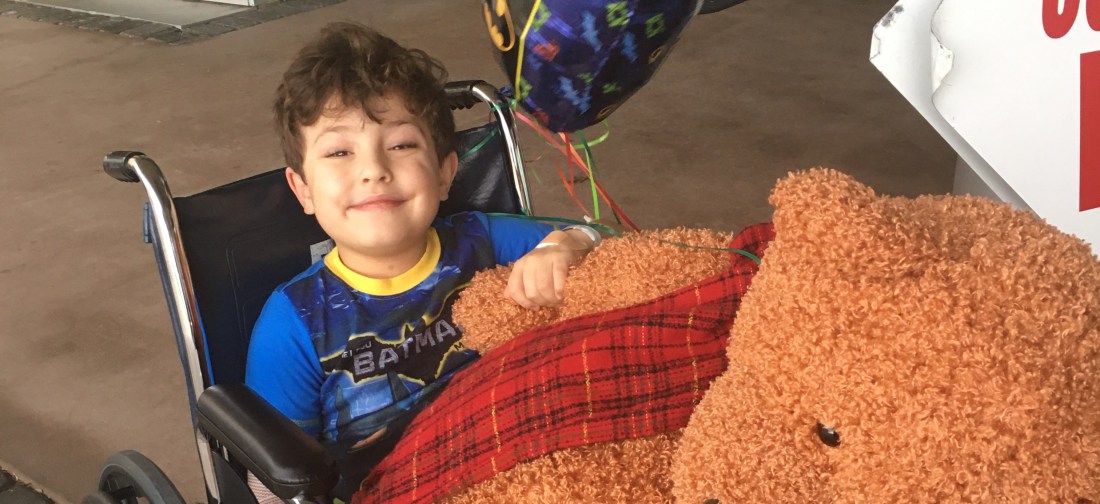
 bELIeve in hope